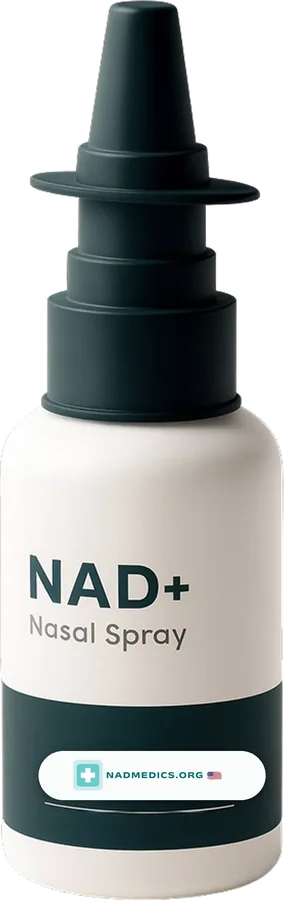
 Nasal SprayFrom $166/mo
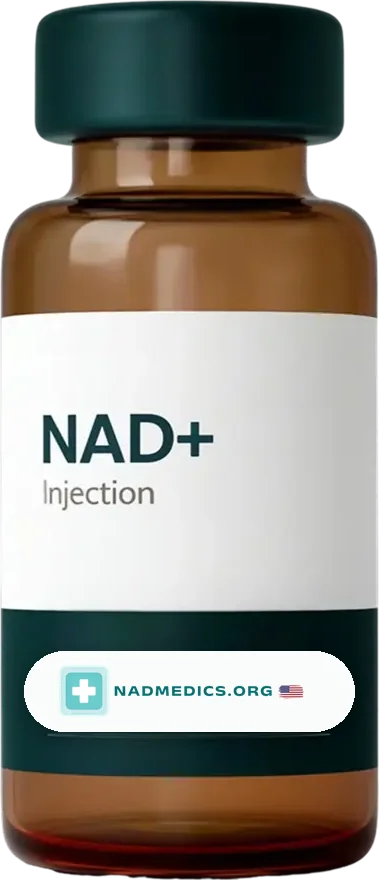 InjectionFrom $166/mo
- Home
- Glossary
30 terms, in plain English
The NAD+ Glossary
NAD+ comes with a lot of jargon. Here are the 30 terms people ask us about most, from NADH and NMN to sirtuins, compounding and bioavailability, each explained simply and backed by official sources.
 Medically reviewed by Vanessa Niles, R.N., M.D., F.A.C.O.G. —
4 terms
Molecules
NAD+ itself, its partner forms and what makes it a coenzyme.
- Nicotinamide adenine dinucleotideNAD+NAD+ is the oxidized form of nicotinamide adenine dinucleotide, a coenzyme found in every living cell. It carries electrons for energy metabolism and is used by enzymes involved in DNA repair.
- Reduced nicotinamide adenine dinucleotideNADHNADH is the reduced form of NAD+. It carries high-energy electrons from the breakdown of food to the electron transport chain in mitochondria, where they help make ATP.
- Nicotinamide adenine dinucleotide phosphateNADP+ and NADPHNADP+ is NAD+ with an extra phosphate group. Its reduced form, NADPH, supplies electrons for building molecules such as fats and cholesterol and for the cell's antioxidant defenses.
- MoleculesCoenzymeA coenzyme is a small, non-protein molecule that an enzyme needs in order to work. NAD+ is one of the body's most widely used coenzymes, and many coenzymes are made from B vitamins.
7 terms
Vitamins & precursors
Vitamin B3 forms and the other building blocks the body turns into NAD+.
- Vitamin B3NiacinNiacin is vitamin B3, an essential nutrient the body turns into NAD and NADP. It includes nicotinic acid and nicotinamide and comes from foods such as poultry, fish, nuts and grains.
- NiacinamideNicotinamideNicotinamide, also called niacinamide, is a form of vitamin B3. It's the building block the body recycles to remake NAD+, and unlike nicotinic acid it doesn't cause skin flushing.
- NiacinNicotinic acidNicotinic acid is the form of vitamin B3 most people mean by 'niacin.' In large doses it causes skin flushing, and it has been used as a prescription cholesterol medicine.
- NRNicotinamide ribosideNicotinamide riboside (NR) is a form of vitamin B3 sold as a dietary supplement. The body converts it to NMN and then to NAD+, and small human trials show it can raise NAD+ levels.
- NMNNicotinamide mononucleotideNicotinamide mononucleotide (NMN) is the molecule one step before NAD+. The body makes it from nicotinamide or NR, and it's studied, and sold, as a way to raise NAD+.
- Vitamins & precursorsTryptophanTryptophan is an essential amino acid found in protein foods. The body can turn some of it into niacin and NAD+: about 60 mg of tryptophan yields 1 mg of niacin.
- Vitamins & precursorsNAD+ precursorAn NAD+ precursor is any molecule the body can turn into NAD+. The main ones are tryptophan, nicotinic acid, nicotinamide, nicotinamide riboside (NR) and nicotinamide mononucleotide (NMN).
5 terms
Enzymes & pathways
The enzymes that make, recycle and use up NAD+.
- Enzymes & pathwaysNAD+ salvage pathwayThe NAD+ salvage pathway recycles nicotinamide, which is released whenever enzymes use NAD+, back into NAD+. It's the main way most human cells keep their NAD+ supply topped up.
- Nicotinamide phosphoribosyltransferaseNAMPTNAMPT (nicotinamide phosphoribosyltransferase) is the enzyme that turns nicotinamide into NMN. It's the rate-limiting step of the salvage pathway that recycles NAD+.
- SIRT1–SIRT7SirtuinsSirtuins are a family of seven enzymes in people (SIRT1 to SIRT7) that need NAD+ to work. They remove chemical tags from proteins and help regulate metabolism, stress responses and DNA upkeep.
- Poly(ADP-ribose) polymerasesPARPsPARPs (poly(ADP-ribose) polymerases) are enzymes that respond when DNA is damaged. They use NAD+ to build chains of ADP-ribose that flag the damage and call in repair proteins.
- Enzymes & pathwaysCD38CD38 is an enzyme on the surface of many cells, especially immune cells, that breaks down NAD+. Studies in mice suggest rising CD38 is a key reason NAD+ falls with age.
5 terms
Cell energy
How NAD+ helps turn food into ATP inside mitochondria.
- Mitochondrion (singular)MitochondriaMitochondria are structures inside cells that turn energy from food into ATP, the cell's main energy currency. NAD+ and NADH are central to how they do it.
- Reduction-oxidationRedox reactionA redox reaction is a chemical reaction in which electrons move from one molecule to another: one is oxidized (loses electrons) and the other is reduced (gains them). NAD+ and NADH are the cell's main electron carriers.
- Citric acid cycle, TCA cycleKrebs cycleThe Krebs cycle, or citric acid cycle, is a loop of reactions in mitochondria that breaks down fuel from food and loads electrons onto NAD+ to make NADH for energy.
- ETCElectron transport chainThe electron transport chain is a series of four protein complexes in the inner membrane of mitochondria. It takes electrons from NADH, passes them to oxygen and uses the energy to make ATP.
- Adenosine triphosphateATPATP (adenosine triphosphate) is the main energy currency of cells. Most of it is made in mitochondria using electrons carried by NADH, which is why NAD+ is tied to energy.
9 terms
Treatment & safety
How NAD+ is prepared, given and regulated, and what to watch for.
- Treatment & safetyPellagraPellagra is the disease caused by severe niacin (vitamin B3) deficiency. It's classically described by three Ds: dermatitis, diarrhea and dementia.
- FlushingNiacin flushNiacin flush is warmth, redness, itching or tingling of the skin, usually on the face and chest, after a large dose of nicotinic acid. It's usually harmless but uncomfortable.
- CompoundingCompounded medicationA compounded medication is a drug mixed or altered by a licensed pharmacist for an individual patient. Compounded drugs, including compounded NAD+, aren't FDA-approved.
- 503A vs 503B503A compounding pharmacyA 503A pharmacy is a state-licensed pharmacy that compounds medicine for individual patients with a valid prescription, under section 503A of federal law. 503B outsourcing facilities work differently.
- SQ, sub-QSubcutaneous injectionA subcutaneous injection is a shot into the fatty layer just under the skin, usually in the belly or thigh, with a short, thin needle. It's how at-home NAD+ injections are given.
- Nasal sprayIntranasal administrationIntranasal administration means giving a medicine as a spray into the nose, where it's absorbed through the nasal lining. It's how NAD+ nasal spray is used.
- NAD+ dripNAD+ IV infusionAn NAD+ IV infusion delivers NAD+ straight into a vein through a drip, usually over several hours in a clinic. It's different from the at-home nasal spray and injections NADMedics prescribes.
- Treatment & safetyBioavailabilityBioavailability is how much of a medicine, and how fast, reaches the bloodstream or the place where it acts. It differs by route: IV, injection, nasal spray or by mouth.
- TelemedicineTelehealthTelehealth is health care delivered remotely, by video, phone or secure messaging. NADMedics uses it so a licensed U.S. provider can evaluate you for NAD+ therapy without an office visit.
Why a glossary
Understand NAD+ before you decide
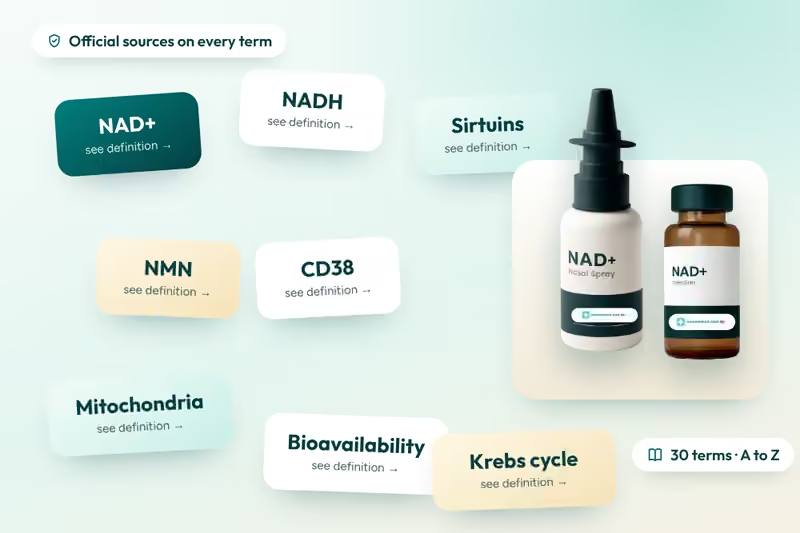
NAD+ marketing is full of science words that sound convincing: sirtuins, mitochondria, precursors, bioavailability. Knowing what they actually mean makes it easier to separate what research shows from what’s still unproven.
Every entry links to official sources from NIH, the FDA and HHS, and each one says plainly where the evidence stops. Bring your questions to a free consultation, and a licensed provider will walk through whether NAD+ fits you.
Index
NAD+ terms from A to Z
Jump straight to the term you’re looking for.
#
- 503A compounding pharmacy · 503A vs 503B
A
- ATP · Adenosine triphosphate
C
- CD38
- Coenzyme
- Compounded medication · Compounding
E
- Electron transport chain · ETC
I
- Intranasal administration · Nasal spray
K
- Krebs cycle · Citric acid cycle, TCA cycle
M
- Mitochondria · Mitochondrion (singular)
N
- NAD+ · Nicotinamide adenine dinucleotide
- NAD+ IV infusion · NAD+ drip
- NAD+ precursor
- NAD+ salvage pathway
- NADH · Reduced nicotinamide adenine dinucleotide
- NADP+ and NADPH · Nicotinamide adenine dinucleotide phosphate
- NAMPT · Nicotinamide phosphoribosyltransferase
- Niacin · Vitamin B3
- Niacin flush · Flushing
- Nicotinamide · Niacinamide
- Nicotinamide mononucleotide · NMN
- Nicotinamide riboside · NR
- Nicotinic acid · Niacin
R
- Redox reaction · Reduction-oxidation
S
- Sirtuins · SIRT1–SIRT7
- Subcutaneous injection · SQ, sub-Q
T
- Telehealth · Telemedicine
- Tryptophan
Questions
NAD+ glossary questions
What's the difference between NAD+ and NADH?
They're two forms of the same coenzyme. NAD+ is the oxidized form that accepts electrons from food; NADH is the reduced form that carries them to the mitochondria to help make ATP.
Are NR and NMN the same as NAD+?
No. Nicotinamide riboside (NR) and nicotinamide mononucleotide (NMN) are precursors the body converts into NAD+. NADMedics prescribes NAD+ itself as a nasal spray or injection.
Is NAD+ FDA-approved?
No. NAD+ has no FDA-approved use. NAD+ nasal sprays and injections are compounded by licensed pharmacies under a prescription and aren't evaluated by the FDA for safety or effectiveness.
Who writes and reviews this glossary?
The NADMedics editorial team writes each entry from official sources such as NIH, the FDA and HHS. Dr. Vanessa Niles, R.N., M.D., F.A.C.O.G., medically reviewed the glossary on October 12, 2026.
Can I suggest a term to add?
Yes. Email team@nadmedics.org with the term and we'll consider it for a future update.
Are glossary entries medical advice?
No. They're general education, reviewed by a physician. Talk with a licensed provider about your own health.
Official sources
NAD+ glossary: sources and official resources
Official government and research sources behind this page, so you can check the facts yourself.
- NIH Office of Dietary SupplementsNiacin: Health Professional Fact Sheet
Explains how the body turns niacin (vitamin B3) into NAD, a coenzyme used by more than 400 enzymes.
- NIH Office of Dietary SupplementsNiacin: Fact Sheet for Consumers
What niacin (vitamin B3) does, how much adults need and which foods provide it.
- NIH PubMed CentralCovarrubias et al. NAD+ metabolism and its roles in cellular processes during ageing (2021)
Review of how NAD+ works in cells and how levels change with age.
- NIH National Library of Medicine (StatPearls)Biochemistry, Electron Transport Chain
How four protein complexes use electrons from NADH to drive ATP production.
- MedlinePlus Genetics (National Library of Medicine)Mitochondrial DNA
What mitochondria do, including making ATP, the cell's main energy source.
- U.S. Food and Drug AdministrationCompounding and the FDA: Questions and Answers
What compounded medicines are and why they aren't FDA-approved.
- U.S. Food and Drug AdministrationHuman Drug Compounding Laws
How sections 503A and 503B of federal law govern compounding pharmacies and outsourcing facilities.
- U.S. Department of Health and Human ServicesWhy use telehealth?
What telehealth (telemedicine) is and when it can help.
Ready to talk NAD+ with a provider?
Book a free online consultation. If NAD+ fits, a licensed U.S. provider prescribes the nasal spray or injection, with plans from $166 a month.
Book a free consultation