
 Nasal SprayFrom $166/mo
 InjectionFrom $166/mo
 Medically reviewed by Vanessa Niles, R.N., M.D., F.A.C.O.G. —
Definition
Electron transport chain, in plain English
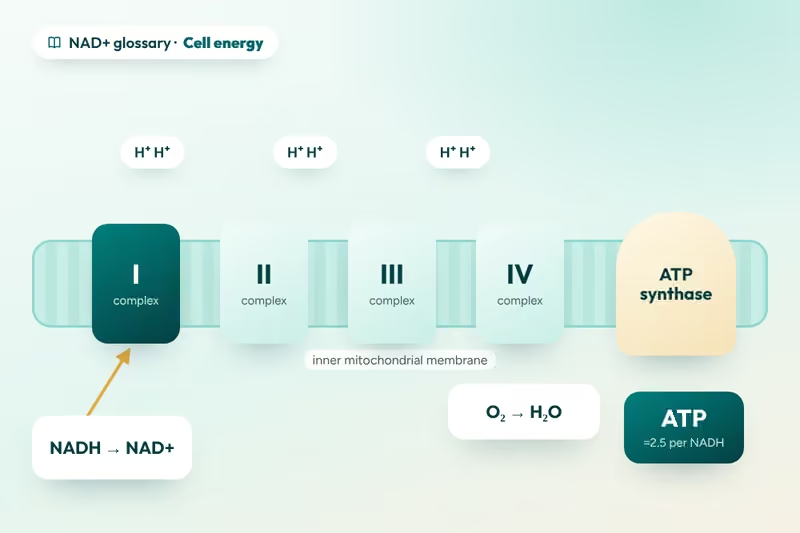
StatPearls describes the chain as a series of four protein complexes that couple redox reactions, pumping protons across the inner mitochondrial membrane. ATP synthase uses that proton gradient to make ATP. Together, this is called oxidative phosphorylation.
NADH enters at complex I, and FADH₂ enters at complex II. At the end of the chain, oxygen accepts the electrons and becomes water.
- Location
- Inner mitochondrial membrane
- NADH enters
- Complex I
- Yield
- About 2.5 ATP per NADH
How it connects
How electron transport chain relates to NAD+
Handing electrons to complex I turns NADH back into NAD+, so the chain is how mitochondria recycle NAD+ for the next round of fuel breakdown. Each NADH supports roughly 2.5 ATP.
For your treatment
What electron transport chain means for NAD+ therapy
Faults in this chain cause rare mitochondrial diseases. NAD+ therapy isn't approved to treat them.
- Free online consultation with a licensed U.S. provider
- NAD+ nasal spray or injection, plans from $166 a month if prescribed
- NAD+ has no FDA-approved use; compounded NAD+ isn’t FDA-approved
Questions
Electron transport chain: common questions
What is the electron transport chain?
The electron transport chain is a series of four protein complexes in the inner membrane of mitochondria. It takes electrons from NADH, passes them to oxygen and uses the energy to make ATP.
Why do we need oxygen?
Oxygen is the final electron acceptor at the end of the chain. Without it, electrons back up and NADH can't be recycled to NAD+ efficiently.
What's oxidative phosphorylation?
The electron transport chain plus ATP synthase working together: the process that makes most of the cell's ATP.
Will NAD+ therapy give me more energy?
That hasn't been shown in healthy people. NAD+ is essential for making ATP, but taking more hasn't been proven to raise energy.
Does exercise affect NAD+?
Exercise has been linked to higher NAMPT, the NAD+ recycling enzyme, in muscle in research studies, and regular activity supports healthy aging.
Should I see a doctor about tiredness first?
Yes, if it's new or lasting. MedlinePlus lists many causes of fatigue, including anemia, depression, medicines and sleep disorders.
Keep learning
Related NAD+ terms
Terms that connect to electron transport chain, each explained on its own page.
- MoleculesNADHNADH is the reduced form of NAD+. It carries high-energy electrons from the breakdown of food to the electron transport chain in mitochondria, where they help make ATP.
- Cell energyMitochondriaMitochondria are structures inside cells that turn energy from food into ATP, the cell's main energy currency. NAD+ and NADH are central to how they do it.
- Cell energyATPATP (adenosine triphosphate) is the main energy currency of cells. Most of it is made in mitochondria using electrons carried by NADH, which is why NAD+ is tied to energy.
- Cell energyRedox reactionA redox reaction is a chemical reaction in which electrons move from one molecule to another: one is oxidized (loses electrons) and the other is reduced (gains them). NAD+ and NADH are the cell's main electron carriers.
Official sources
Electron transport chain: sources and official resources
Official government and research sources behind this page, so you can check the facts yourself.
- NIH National Library of Medicine (StatPearls)Biochemistry, Electron Transport Chain
How four protein complexes use electrons from NADH to drive ATP production.
- NIH National Library of Medicine (StatPearls)Biochemistry, Oxidative Phosphorylation
The redox reactions that move electrons from NADH and FADH2 to oxygen to make ATP.
- MedlinePlus Genetics (National Library of Medicine)Mitochondrial DNA
What mitochondria do, including making ATP, the cell's main energy source.
- National Human Genome Research InstituteMitochondria (Talking Glossary of Genomic and Genetic Terms)
Plain-language definition of mitochondria from the NIH genome institute.
Medically reviewed by Dr. Vanessa Niles, R.N., M.D., F.A.C.O.G., on October 12, 2026. This glossary is general education, not medical advice. NAD+ has no FDA-approved use, and compounded NAD+ is not FDA-approved or evaluated by the FDA for safety or effectiveness. Talk with a licensed provider before starting any supplement or treatment.
Questions about NAD+? Ask a provider
Book a free online consultation. A licensed U.S. provider reviews your health and, if NAD+ fits, prescribes the nasal spray or injection, with plans from $166 a month.
Book a free consultation