
 Nasal SprayFrom $166/mo
 InjectionFrom $166/mo
 Medically reviewed by Vanessa Niles, R.N., M.D., F.A.C.O.G. —
Definition
CD38, in plain English
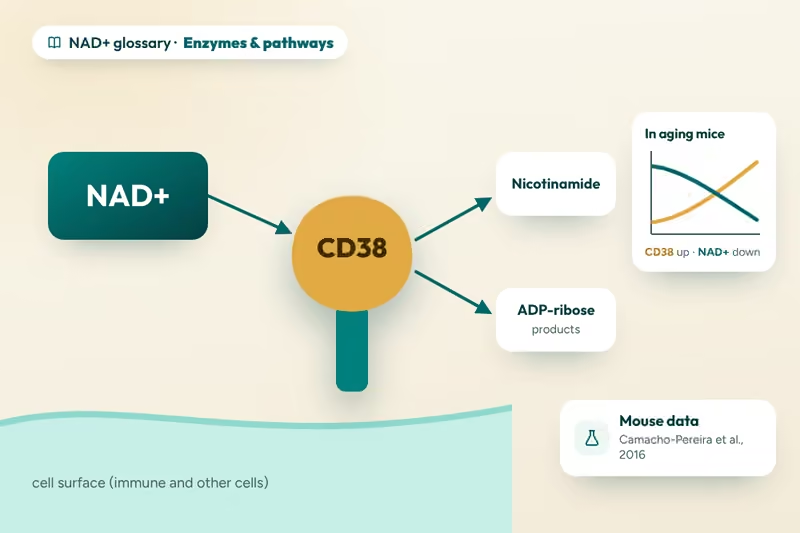
CD38 is best known as a marker on immune cells. It's also an NAD+-consuming enzyme that breaks NAD+ down into nicotinamide and other products.
In a 2016 mouse study in Cell Metabolism, CD38 levels rose with age, and mice lacking CD38 kept higher NAD+ levels and better mitochondrial function (Camacho-Pereira et al.).
- Type
- NAD+-consuming enzyme
- Found on
- Immune and other cells
- Linked to
- Age-related NAD+ decline (mice)
How it connects
How CD38 relates to NAD+
Scientists summarized the idea in a commentary titled 'Why NAD+ declines during aging: it's destroyed' (Schultz and Sinclair, 2016), pointing to CD38 as a major consumer.
For your treatment
What CD38 means for NAD+ therapy
A CD38-targeting antibody, daratumumab, is used to treat multiple myeloma, for reasons unrelated to NAD+. No CD38 blocker is used to raise NAD+ in people.
- Free online consultation with a licensed U.S. provider
- NAD+ nasal spray or injection, plans from $166 a month if prescribed
- NAD+ has no FDA-approved use; compounded NAD+ isn’t FDA-approved
Questions
CD38: common questions
What is CD38?
CD38 is an enzyme on the surface of many cells, especially immune cells, that breaks down NAD+. Studies in mice suggest rising CD38 is a key reason NAD+ falls with age.
Does CD38 cause aging?
No one has shown that. Mouse research links rising CD38 to falling NAD+, but how much this matters in people is still being studied.
Can I lower CD38?
There's no proven way to lower CD38 to raise NAD+ in people.
Does NAD+ therapy change how these enzymes work in people?
That hasn't been shown. Most research on NAD+ enzymes comes from cells and animals.
Are there medicines that target NAD+ enzymes?
Yes, in cancer care: PARP inhibitors treat some cancers, and a CD38 antibody (daratumumab) treats multiple myeloma. They aren't used to raise NAD+.
Why does enzyme research matter for NAD+ therapy?
It explains why NAD+ is worth studying. Plausible biology isn't the same as proof that NAD+ therapy helps people.
Keep learning
Related NAD+ terms
Terms that connect to CD38, each explained on its own page.
- Enzymes & pathwaysSirtuinsSirtuins are a family of seven enzymes in people (SIRT1 to SIRT7) that need NAD+ to work. They remove chemical tags from proteins and help regulate metabolism, stress responses and DNA upkeep.
- Enzymes & pathwaysPARPsPARPs (poly(ADP-ribose) polymerases) are enzymes that respond when DNA is damaged. They use NAD+ to build chains of ADP-ribose that flag the damage and call in repair proteins.
- Enzymes & pathwaysNAD+ salvage pathwayThe NAD+ salvage pathway recycles nicotinamide, which is released whenever enzymes use NAD+, back into NAD+. It's the main way most human cells keep their NAD+ supply topped up.
- Cell energyMitochondriaMitochondria are structures inside cells that turn energy from food into ATP, the cell's main energy currency. NAD+ and NADH are central to how they do it.
Official sources
CD38: sources and official resources
Official government and research sources behind this page, so you can check the facts yourself.
- NIH PubMedCamacho-Pereira et al. CD38 dictates age-related NAD decline and mitochondrial dysfunction (2016)
Mouse study linking rising CD38 with falling NAD+ during aging.
- NIH PubMedSchultz and Sinclair. Why NAD+ declines during aging: it's destroyed (2016)
Commentary on CD38 as a major consumer of NAD+.
- NIH PubMed CentralCovarrubias et al. NAD+ metabolism and its roles in cellular processes during ageing (2021)
Review of how NAD+ works in cells and how levels change with age.
- NIH PubMedNAD+ therapy in age-related degenerative disorders: a benefit/risk analysis (2020)
Weighs early promise against the lack of long-term human trials.
Medically reviewed by Dr. Vanessa Niles, R.N., M.D., F.A.C.O.G., on October 12, 2026. This glossary is general education, not medical advice. NAD+ has no FDA-approved use, and compounded NAD+ is not FDA-approved or evaluated by the FDA for safety or effectiveness. Talk with a licensed provider before starting any supplement or treatment.
Questions about NAD+? Ask a provider
Book a free online consultation. A licensed U.S. provider reviews your health and, if NAD+ fits, prescribes the nasal spray or injection, with plans from $166 a month.
Book a free consultation