
 Nasal SprayFrom $166/mo
 InjectionFrom $166/mo
 Medically reviewed by Vanessa Niles, R.N., M.D., F.A.C.O.G. —
Definition
PARPs, in plain English
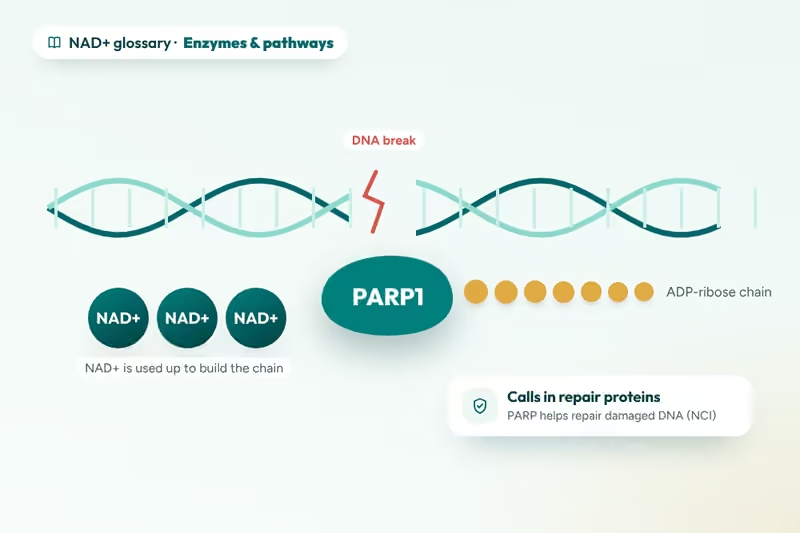
PARP1, the best-known member, is described in NIH's gene database as a chromatin-associated enzyme that modifies nuclear proteins. When DNA breaks, PARP1 binds the site and attaches chains of ADP-ribose made from NAD+.
The National Cancer Institute explains it simply: PARP helps repair DNA when it becomes damaged.
- Full name
- Poly(ADP-ribose) polymerase
- Job
- DNA damage response
- Uses
- NAD+ (releases nicotinamide)
How it connects
How PARPs relates to NAD+
Heavy PARP activity can use up NAD+ quickly. Research reviews describe ongoing DNA damage and PARP activity as one of the drains on NAD+ with age.
For your treatment
What PARPs means for NAD+ therapy
PARP inhibitors are cancer drugs that block this repair in some tumor cells. If you're in cancer treatment, NADMedics won't prescribe NAD+ without your oncologist's agreement.
- Free online consultation with a licensed U.S. provider
- NAD+ nasal spray or injection, plans from $166 a month if prescribed
- NAD+ has no FDA-approved use; compounded NAD+ isn’t FDA-approved
Questions
PARPs: common questions
What are PARPs?
PARPs (poly(ADP-ribose) polymerases) are enzymes that respond when DNA is damaged. They use NAD+ to build chains of ADP-ribose that flag the damage and call in repair proteins.
What is a PARP inhibitor?
A cancer medicine that blocks the PARP enzyme so some tumor cells can't repair their DNA, as the National Cancer Institute describes.
Does NAD+ therapy affect PARP?
PARPs use NAD+, but how extra NAD+ affects PARP activity in people hasn't been established.
Does NAD+ therapy change how these enzymes work in people?
That hasn't been shown. Most research on NAD+ enzymes comes from cells and animals.
Are there medicines that target NAD+ enzymes?
Yes, in cancer care: PARP inhibitors treat some cancers, and a CD38 antibody (daratumumab) treats multiple myeloma. They aren't used to raise NAD+.
Why does enzyme research matter for NAD+ therapy?
It explains why NAD+ is worth studying. Plausible biology isn't the same as proof that NAD+ therapy helps people.
Keep learning
Related NAD+ terms
Terms that connect to PARPs, each explained on its own page.
- Enzymes & pathwaysSirtuinsSirtuins are a family of seven enzymes in people (SIRT1 to SIRT7) that need NAD+ to work. They remove chemical tags from proteins and help regulate metabolism, stress responses and DNA upkeep.
- Enzymes & pathwaysCD38CD38 is an enzyme on the surface of many cells, especially immune cells, that breaks down NAD+. Studies in mice suggest rising CD38 is a key reason NAD+ falls with age.
- MoleculesNAD+NAD+ is the oxidized form of nicotinamide adenine dinucleotide, a coenzyme found in every living cell. It carries electrons for energy metabolism and is used by enzymes involved in DNA repair.
- Enzymes & pathwaysNAD+ salvage pathwayThe NAD+ salvage pathway recycles nicotinamide, which is released whenever enzymes use NAD+, back into NAD+. It's the main way most human cells keep their NAD+ supply topped up.
Official sources
PARPs: sources and official resources
Official government and research sources behind this page, so you can check the facts yourself.
- NIH National Center for Biotechnology InformationPARP1 poly(ADP-ribose) polymerase 1 [human] (NCBI Gene)
Gene record for PARP1, a chromatin-associated enzyme involved in DNA repair.
- National Cancer InstituteNCI Dictionary of Cancer Terms: PARP inhibitor
PARP helps repair damaged DNA; PARP inhibitors block it in some cancers.
- NIH PubMed CentralCovarrubias et al. NAD+ metabolism and its roles in cellular processes during ageing (2021)
Review of how NAD+ works in cells and how levels change with age.
- NIH PubMedNAD+ therapy in age-related degenerative disorders: a benefit/risk analysis (2020)
Weighs early promise against the lack of long-term human trials.
Medically reviewed by Dr. Vanessa Niles, R.N., M.D., F.A.C.O.G., on October 12, 2026. This glossary is general education, not medical advice. NAD+ has no FDA-approved use, and compounded NAD+ is not FDA-approved or evaluated by the FDA for safety or effectiveness. Talk with a licensed provider before starting any supplement or treatment.
Questions about NAD+? Ask a provider
Book a free online consultation. A licensed U.S. provider reviews your health and, if NAD+ fits, prescribes the nasal spray or injection, with plans from $166 a month.
Book a free consultation