
 Nasal SprayFrom $166/mo
 InjectionFrom $166/mo
 Medically reviewed by Vanessa Niles, R.N., M.D., F.A.C.O.G. —
Definition
Niacin flush, in plain English
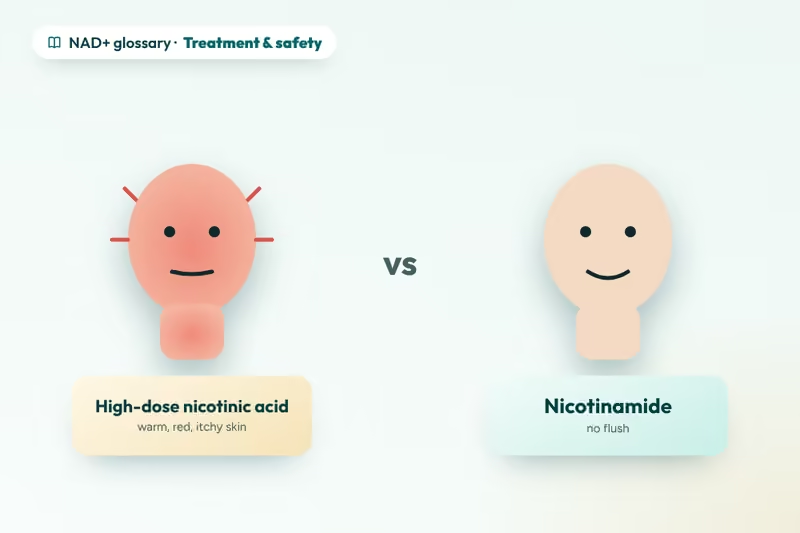
NIH explains that nicotinic acid in supplemental amounts beyond nutritional needs can cause skin flushing, while nicotinamide doesn't. The 35 mg adult upper limit for supplemental niacin is set to avoid it.
Flushing tends to lessen as the body adjusts, and taking niacin with food may help. Extended-release forms flush less but carry more risk to the liver at high doses.
- Caused by
- High-dose nicotinic acid
- Feels like
- Warm, red, itchy skin
- Not caused by
- Nicotinamide (niacinamide)
How it connects
How niacin flush relates to NAD+
NAD+ itself can also cause a warm, flushed feeling, especially when it's given quickly by IV or injection. That's a separate reaction from niacin flush, though it can feel similar.
For your treatment
What niacin flush means for NAD+ therapy
If you feel flushed after an NAD+ injection, injecting more slowly often helps. Tell your provider if it bothers you, and call 911 for chest pain or trouble breathing.
- Free online consultation with a licensed U.S. provider
- NAD+ nasal spray or injection, plans from $166 a month if prescribed
- NAD+ has no FDA-approved use; compounded NAD+ isn’t FDA-approved
Questions
Niacin flush: common questions
What is niacin flush?
Niacin flush is warmth, redness, itching or tingling of the skin, usually on the face and chest, after a large dose of nicotinic acid. It's usually harmless but uncomfortable.
Is niacin flush dangerous?
Usually not, but it can be uncomfortable, and high doses can also cause dizziness or low blood pressure. Talk with a doctor before taking high-dose niacin.
Why does NAD+ make me flush?
Flushing is commonly reported with NAD+, especially when it's given quickly. The exact reason isn't well studied; slowing the injection often helps.
What strengths does NADMedics prescribe?
Nasal spray: 30 mg per 0.1 mL in a 15 mL bottle. Injection: 200 mg/mL in a 5 mL vial. Your provider sets your dose.
How do I report a side effect?
Tell your provider, and you can report it to the FDA's MedWatch program. Call 911 for chest pain or trouble breathing.
Do I need a prescription for NAD+?
Yes. Compounded NAD+ requires a prescription from a licensed provider after a review of your health.
Keep learning
Related NAD+ terms
Terms that connect to niacin flush, each explained on its own page.
- Vitamins & precursorsNicotinic acidNicotinic acid is the form of vitamin B3 most people mean by 'niacin.' In large doses it causes skin flushing, and it has been used as a prescription cholesterol medicine.
- Vitamins & precursorsNiacinNiacin is vitamin B3, an essential nutrient the body turns into NAD and NADP. It includes nicotinic acid and nicotinamide and comes from foods such as poultry, fish, nuts and grains.
- Treatment & safetySubcutaneous injectionA subcutaneous injection is a shot into the fatty layer just under the skin, usually in the belly or thigh, with a short, thin needle. It's how at-home NAD+ injections are given.
- Treatment & safetyNAD+ IV infusionAn NAD+ IV infusion delivers NAD+ straight into a vein through a drip, usually over several hours in a clinic. It's different from the at-home nasal spray and injections NADMedics prescribes.
Guides that cover niacin flush
- How Much NAD+ Should I Inject? Dosage Made Simple for YouHow much NAD+ should you inject? There's no FDA-approved dose, so your provider sets it. Learn what shapes that dose, what studies used and how to measure it.NAD+ injections
- Are NAD+ Injections Safe? The Real Risks and Benefits SharedAre NAD+ injections safe? See the common side effects, what FDA alerts found about contaminated NAD+, who should avoid it and how to lower your risk.NAD+ injections
- NAD+ Nasal Spray vs Injection: Which Delivery Method Wins?NAD+ nasal spray or injection? Compare how each is used, side effects, needles, convenience and evidence, and see why neither has been proven better.NAD+ nasal spray
Official sources
Niacin flush: sources and official resources
Official government and research sources behind this page, so you can check the facts yourself.
- NIH Office of Dietary SupplementsNiacin: Health Professional Fact Sheet
Explains how the body turns niacin (vitamin B3) into NAD, a coenzyme used by more than 400 enzymes.
- MedlinePlus (National Library of Medicine)Niacin and niacinamide (Vitamin B3)
Uses, safety and interactions of the two main forms of vitamin B3.
- NIH National Library of Medicine (StatPearls)Niacin (StatPearls, archived)
Clinical review: NAD and NADP as the active forms of niacin, and niacin's use as a cholesterol drug.
- U.S. Food and Drug AdministrationMedWatch: The FDA Safety Information and Adverse Event Reporting Program
Where patients can report side effects or problems with a medicine to the FDA.
Medically reviewed by Dr. Vanessa Niles, R.N., M.D., F.A.C.O.G., on October 12, 2026. This glossary is general education, not medical advice. NAD+ has no FDA-approved use, and compounded NAD+ is not FDA-approved or evaluated by the FDA for safety or effectiveness. Talk with a licensed provider before starting any supplement or treatment.
Questions about NAD+? Ask a provider
Book a free online consultation. A licensed U.S. provider reviews your health and, if NAD+ fits, prescribes the nasal spray or injection, with plans from $166 a month.
Book a free consultation