
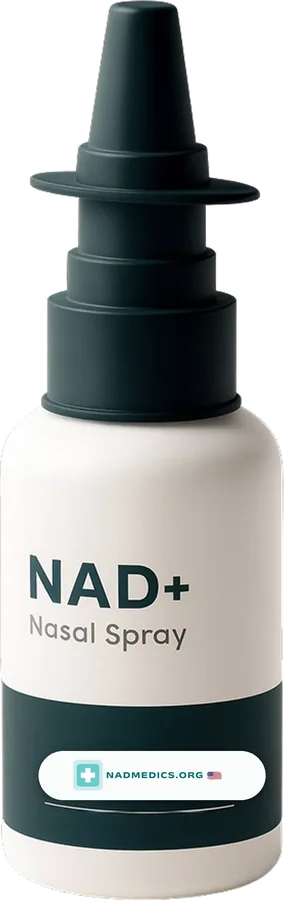
 Nasal SprayFrom $166/mo
 InjectionFrom $166/mo
 Medically reviewed by Vanessa Niles, R.N., M.D., F.A.C.O.G. —
The short answer
Follow the storage line on your pharmacy label. Many compounded NAD+ products are kept in the refrigerator, but instructions vary by formulation. MedlinePlus notes that heat, air, light and moisture can damage medicines.
- Your pharmacy label is the rule.
- Many NAD+ products are refrigerated.
- Keep the cap on and keep it out of heat and sunlight.
- If it got hot or looks different, call your pharmacy.
Read the label first
Compounded medicines are made for you, so storage and beyond-use dates are set by the pharmacy that prepared them. If the label says refrigerate, keep it in the fridge, not the door if the door gets warm.
Travel tips
- Use a small insulated pouch with a cool pack if your label calls for refrigeration
- Never leave it in a hot car
- Keep it in your carry-on, with your prescription label
Storage
Cool, capped and out of the sun
Follow the label, keep the cap on and protect the bottle from heat and light.
If something seems off
If the spray was left in heat, changed color, looks cloudy or the pump won't mist, don't use it until you've asked your pharmacist. Ask your pharmacist about any specific storage instructions, as MedlinePlus advises.
NAD+ terms used in this guide
Questions
Questions people also ask
Is it ruined if it sat out overnight?
Not necessarily. Call your pharmacy; they know the formulation.
Can I freeze it?
Don't, unless your label says to.
How long does a bottle last?
Check the beyond-use date on your label.
Can I fly with my NAD+ spray?
Generally yes. Keep it in your carry-on with the prescription label, and check current TSA rules before you travel.
Can I keep it in the bathroom?
Better not. MedlinePlus notes that heat, air, light and moisture can damage medicines, and bathrooms get warm and humid.
What is a beyond-use date?
The date after which the pharmacy says not to use your compounded medicine. It's printed on your label.
Keep reading
Related NAD+ guides
- NAD+ Nasal Spray Dosage: How Much Should You Really Use?How much NAD+ nasal spray should you use? Learn how sprays per day are set, how to work out mg per spray from your label and how to use the pump right.NAD+ nasal spray
- NAD+ Nasal Spray vs Injection: Which Delivery Method Wins?NAD+ nasal spray or injection? Compare how each is used, side effects, needles, convenience and evidence, and see why neither has been proven better.NAD+ nasal spray
- NAD+ Nasal Spray Prescription: Do You Actually Need One?Do you need a prescription for NAD+ nasal spray? Compounded NAD+ spray from a licensed pharmacy does. Learn why, how to get one online and what to avoid.NAD+ nasal spray
Official sources
Sources and official resources
Official government and research sources behind this page, so you can check the facts yourself.
- MedlinePlus (National Library of Medicine)Storing your medicines
Heat, air, light and moisture can damage medicines; ask your pharmacist about storage.
- U.S. Food and Drug AdministrationCompounding and the FDA: Questions and Answers
What compounded medicines are and why they aren't FDA-approved.
- U.S. Food and Drug AdministrationDisposal of Unused Medicines: What You Should Know
Take-back locations and safe ways to get rid of medicine you no longer need.
- MedlinePlus (National Library of Medicine)How to Use Nasal Sprays
General steps for using a nasal spray correctly.
Medically reviewed by Dr. Vanessa Niles, R.N., M.D., F.A.C.O.G., on October 12, 2026. This article is general education, not medical advice. NAD+ has no FDA-approved use, and compounded NAD+ is not FDA-approved or evaluated by the FDA for safety or effectiveness. Only your provider can set your dose.
Talk it through with a provider
Book a free online consultation. If NAD+ fits, a licensed U.S. provider prescribes the nasal spray or injection, with plans from $166 a month.
Book a free consultation